At this time of year, the lemon grove is a living organism in full motion. As the trees work through fruit set (the formation of tiny fruits from the lemon blossoms), the sun of the Sele Plain begins to make its presence strongly felt among the rows.
For us farmers, this is a time of care: we monitor irrigation and prepare the soil so it can retain the moisture needed to withstand the hottest hours. But it is also the moment when, in the shade of the fullest branches, we seek that refreshment that only a lemon can provide.
The Miracle of Fruit Set and the Lemon Blossom
During this period, the grove is wrapped in an almost intoxicating fragrance. It comes from the lemon blossoms.
But beauty is only part of the story:
- Pollination: This is the most delicate phase. Bees work frantically, moving from flower to flower.
- Fruit Set: Looking closely, where the petal falls, a tiny green “dot” appears, no bigger than a peppercorn. That is the lemon being born. At this stage, the tree is vulnerable: a sudden temperature change or a strong wind can cause the young fruits to drop (the so-called “fruit drop”), compromising the entire season.
The Coexistence of “Three Seasons”
Unlike many other fruit trees, the lemon tree can bloom repeatedly, and up to three stages can coexist on the same plant:
- The First Blossom: the promise of the autumn harvest.
- The "Bianchetto": the lemon currently finishing its ripening, with a smooth, pale peel, born from late-winter flowering.
- The “Verdello”: the small green fruits that will become summer lemons, more delicate and intensely fragrant.
Manual Work: Pruning and Nourishment
No automation can replace this. These days we focus on sucker removal: we manually remove the vigorous vertical shoots that grow from the trunk or main branches. They are “sap thieves”: if left, they would drain energy from the developing fruit.
At the same time, the soil of the Sele Plain is lightly loosened to aerate the roots and allow spring rains (when they come) to penetrate deeply, without water stagnation.
Egle and Aretusa: Grandmother’s Recipes in a Bottle
When thirst struck during the harvest, our grandmother didn’t go to the store. She would take a bucket of fresh water, pick the juiciest fruits, and create something magical. We wanted to capture that exact memory in two organic drinks that taste like home.
Egle: The Radiant Lemonade
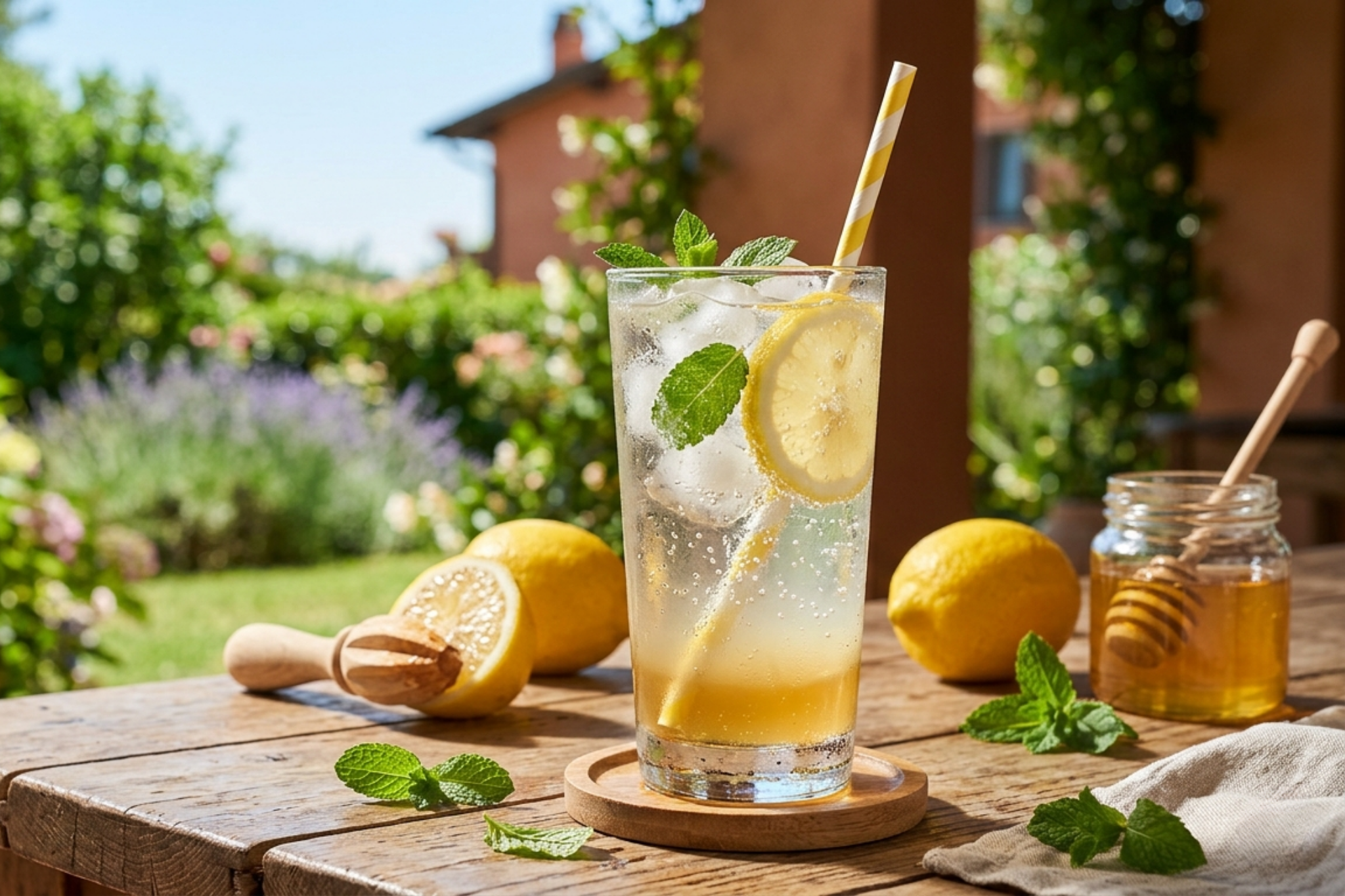
In mythology, Egle is the nymph of light. Our lemonade reflects that: bright, honest, made with the juice of our organic lemons from Eboli.
- What it’s made of: Only real lemons, water, and just the right sparkle.
- The taste: It’s the flavor of freshly squeezed orange juice diluted with pure water—sweet, but with that lingering citrus note that truly refreshes.
Aretusa: Orange Soda the Old-Fashioned Way
Named after the nymph of springs, this is a tribute to our lovingly grown oranges.
- What it’s made of: A burst of natural vitamin C, with no artificial colorings or flavorings.
- The taste: It’s the flavor of freshly squeezed orange juice diluted with pure water: sweet, but with that lingering citrus note that truly refreshes.
Iolanda’s Tip: The Farmer’s Aperitif
With the arrival of the first warm days, turn Egle or Aretusa into the perfect alcohol-free aperitif: